about

about

about

about

Alexander Hohla

Alexander Hohla

b.1968

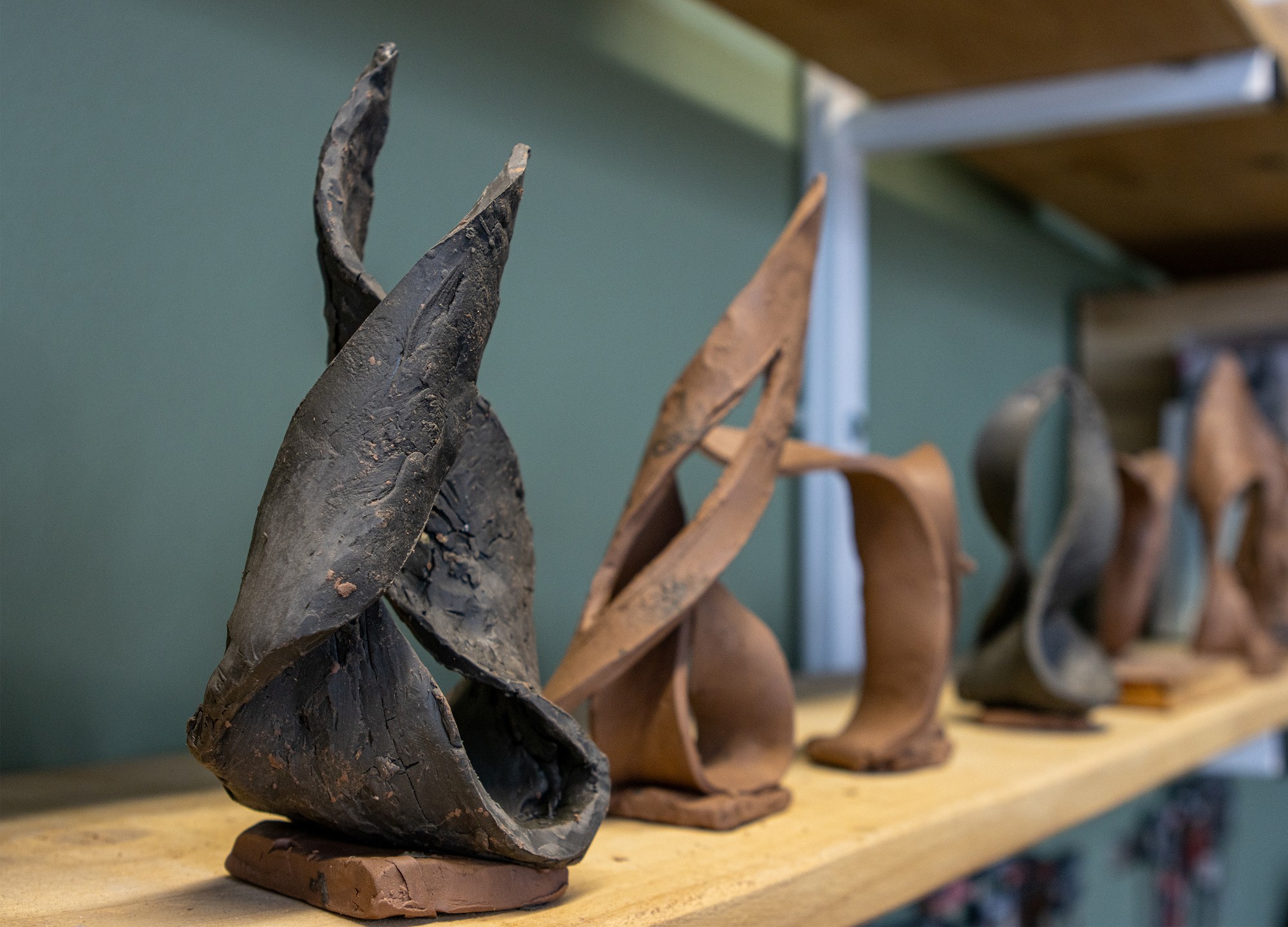
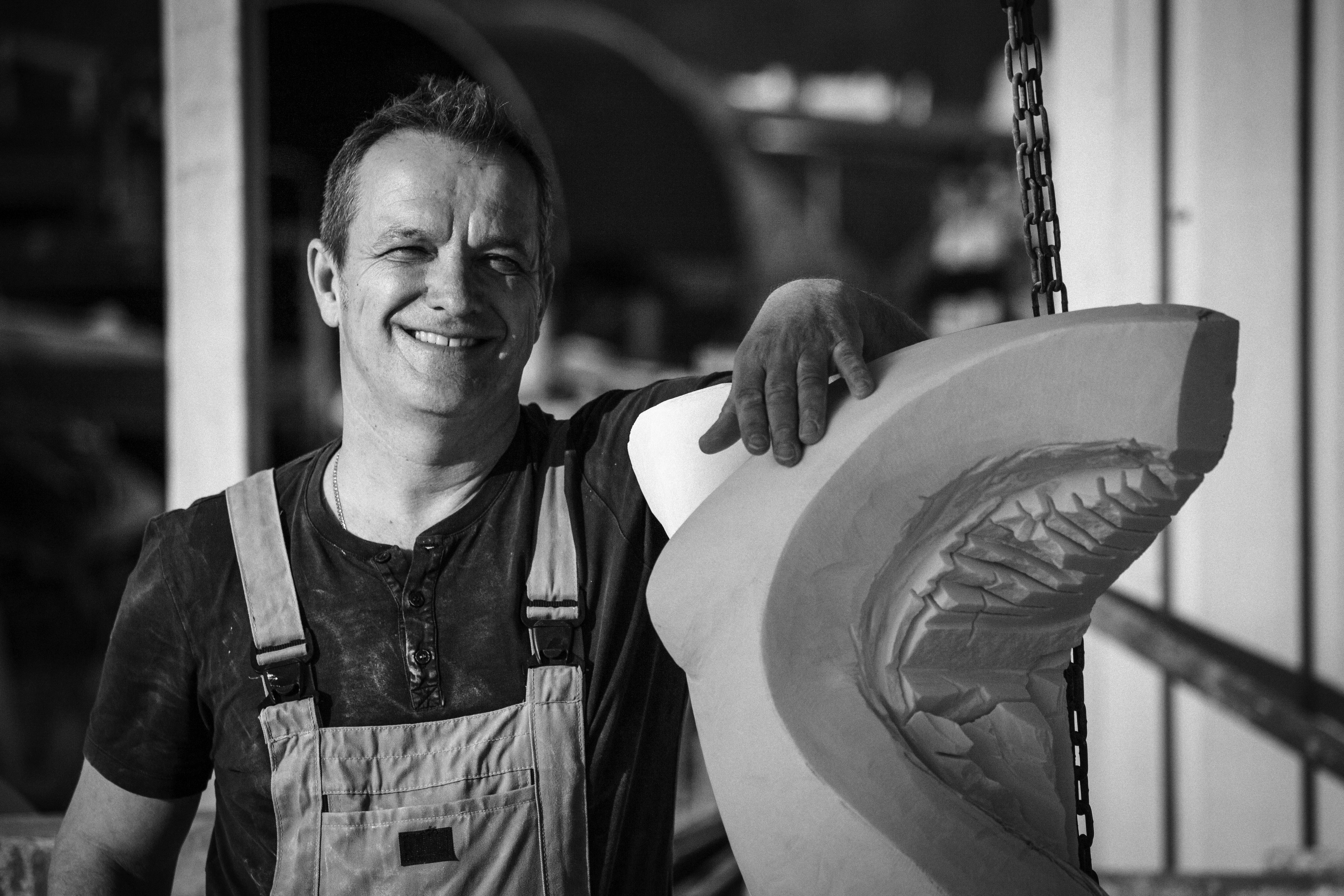
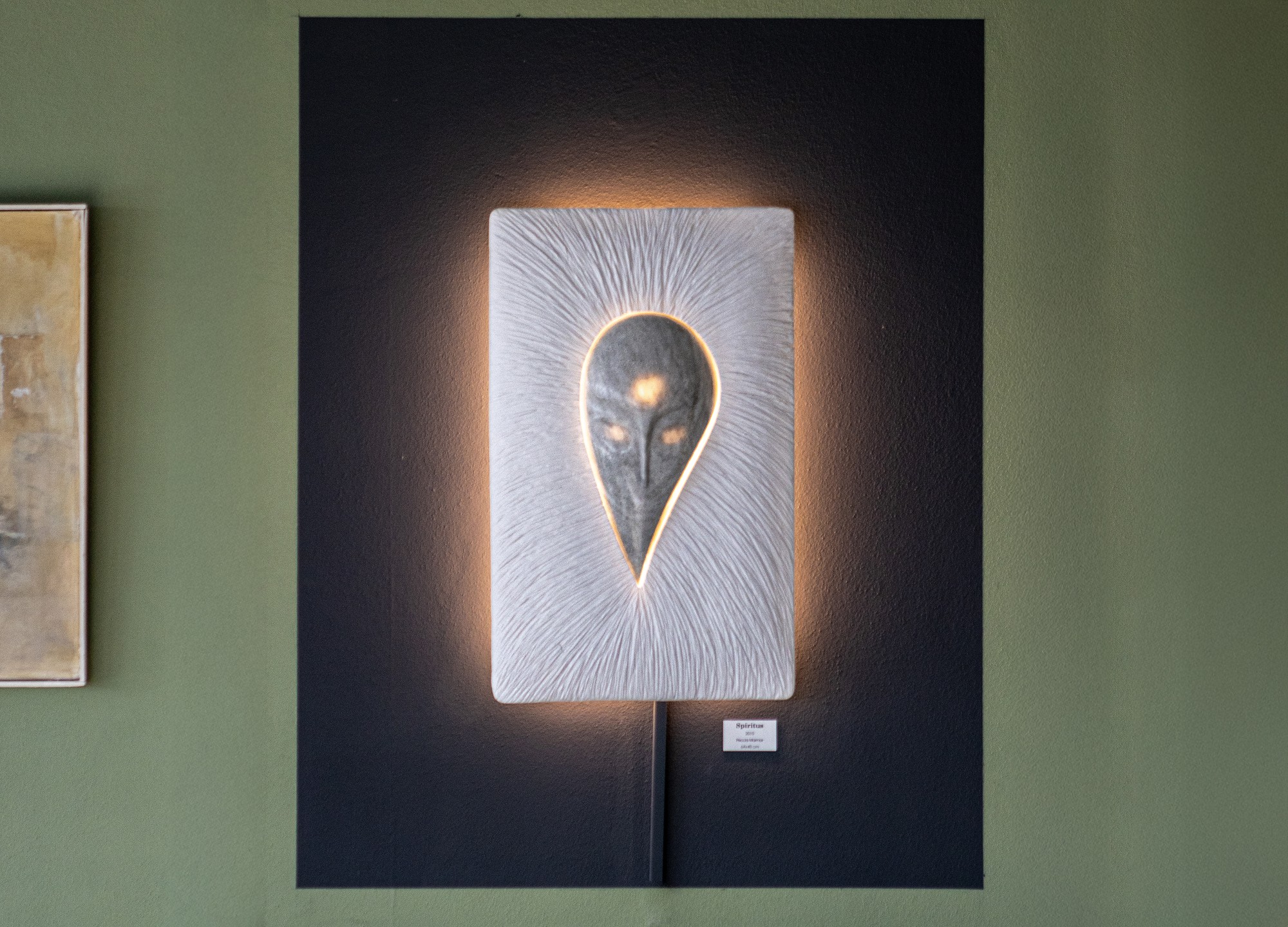
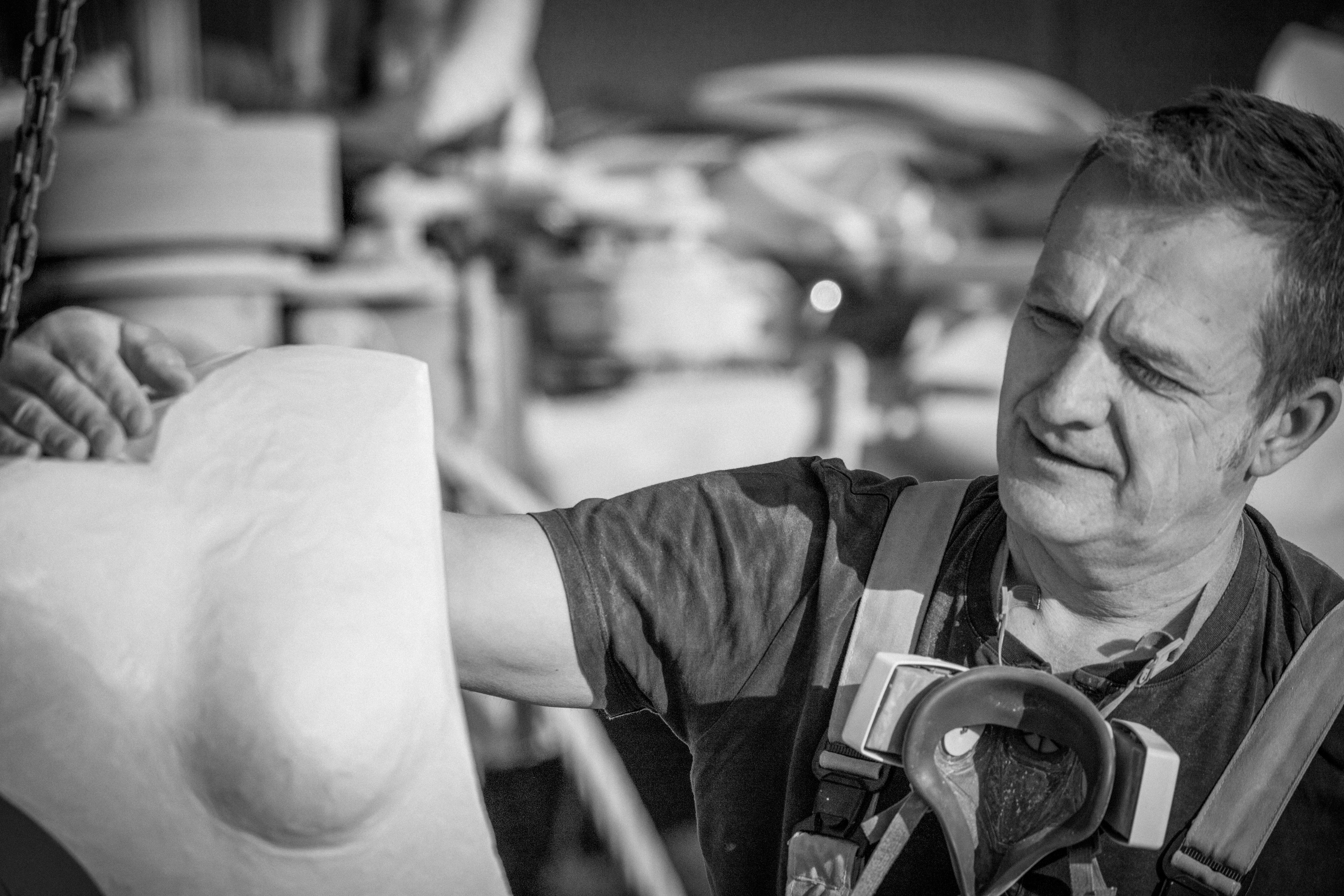
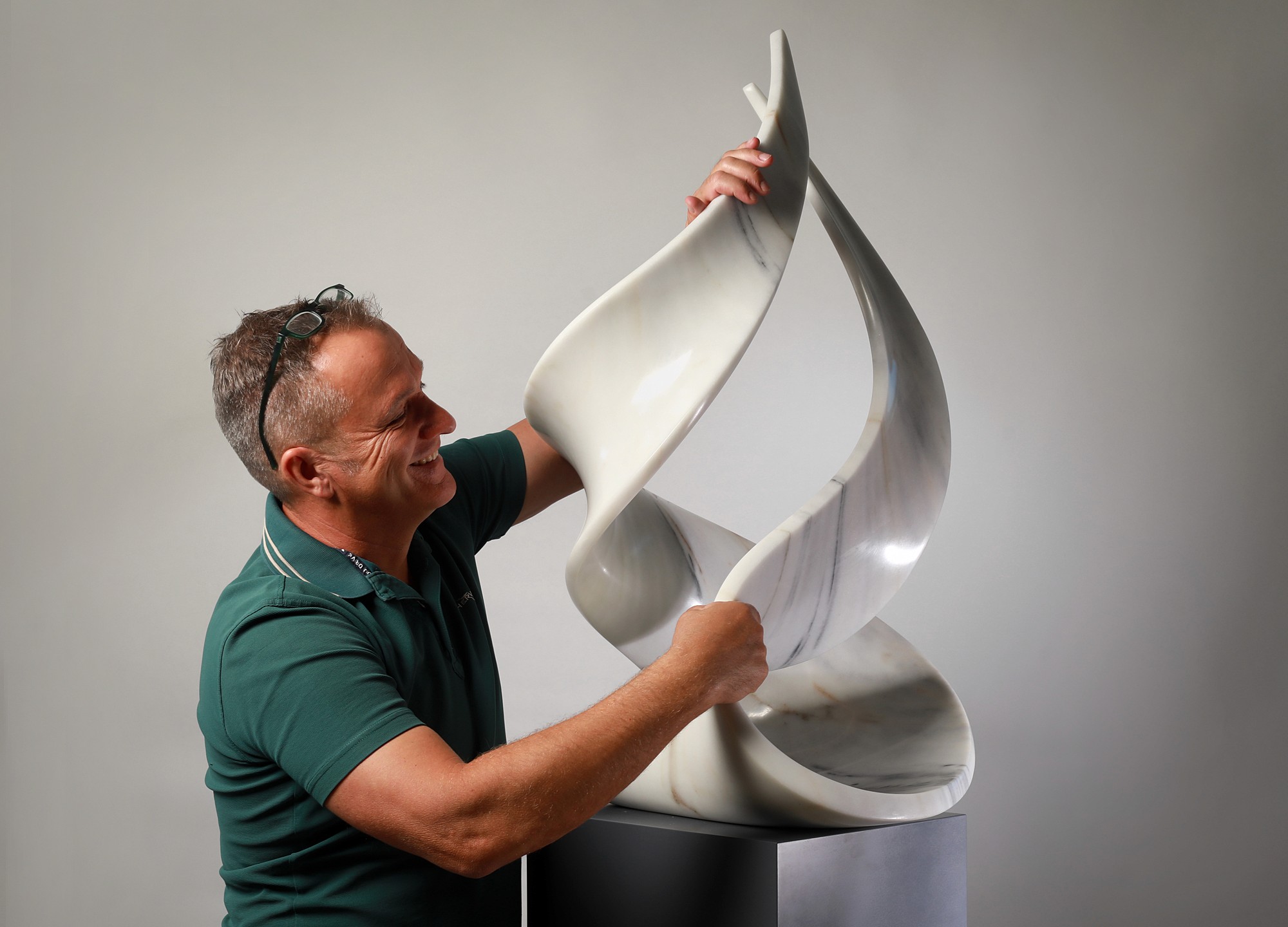
Alexander Hohla brings together the precision of a physicist and the intuition of an artist. His transition from experimental physics to sculpture is a story of reinvention, one that reflects a deep curiosity about structure, light, and material. After years working with lasers and studying the behavior of light, he turned to marble, a medium that allows him to explore form in a tangible, enduring way.


His background in experimental physics shapes the way he approaches sculpture. The same meticulous care once applied to analyzing the properties of light now guides his process of uncovering the hidden potential within marble. His work is an exploration of balance, between strength and lightness, structure and spontaneity, science and art.

Marble, with its rich history and timeless presence, provides the perfect medium for Alexander’s artistic vision. While rooted in tradition, his work carries a contemporary sensibility, reflecting themes of resilience, harmony, and transformation. Each piece invites reflection, embodying both technical mastery and emotional depth.


Alexander sees sculpture as a means of creating presence, an anchor in space that fosters a sense of calm and contemplation. Whether in private collections, galleries, or public spaces, his work is designed to stand the test of time, connecting past and present through form and material.

Chronology

Chronology

2015

Established his personal studio in Vrhovčak, Samobor, Croatia, where he continues to develop his craft.

2012 - 2015

Worked on various sculptural projects at Klesarstvo Stipe Lucić, Sveta Nedjelja, Croatia.

2007 – 2012

Worked with sculptor Josef Lang in Denklingen, Germany.

2004

Participated in the Stone Sculpture Symposium, Scuola di Scultura, Vallemaggia, Ticino, Switzerland

2003

Participated in the Stone Sculpture Symposium, Campo Altissimo, Carrara, Italy.tablished his personal studio in Vrhovčak, Samobor, Croatia, where he continues to develop his craft.

2002

Attended a sculpting course with Annette Boss, Carrara, Italy Discovered a passion for stone sculpture through a sculpting course in Carrara, Italy, under German sculptor Annette Boss. Began exploring sculpting techniques as a largely self-taught artist, with the support of various courses and symposia in Germany, Italy, and Switzerland.

1998 – 2002

Worked at the Laser Research Institute (Laser Forschungs Institut Grosshadern) in Germany, earning a doctorate (Dr. hum. biol.). His doctoral research focused on identifying tumor tissue using UV light.

1996

Graduated from Ludwig-Maximilians-Universität in Munich as a physicist and specialist in lasers

1968

Born in Munich, Germany.
others on Alex's work

others on Alex's work
KO-KE Space, Zagreb 21 Nov – 5 Dec 2025.
Published in Art Magazine Kontura, issue no. 170 / 171


Over the past several years, there has been a noticeable increase in the number of creators and artists who, after distinguished international careers in other professions, continue to study and refine artistic disciplines and crafts, as though naturally resuming a path once interrupted in their youth – for, as we know, art is hardly “a secure livelihood,” yet science and art demonstrably go hand in hand.

One such artist, whose sculptural oeuvre unquestionably transcends amateur engagement with sculpture, is Aleksander Hohla, a physicist and sculptor of German origin with a Croatian address, who recently presented himself to the Zagreb public for the first time at the multifunctional KO:KE Space. After years devoted to researching laser light and the structure of materials, Alexander Hohla turned to marble – a medium that enables him to explore the balance between strength and lightness, structure and spontaneity, science and art. In the accompanying exhibition text, curator Anita Ruso points out that “his sculptures, at once enduring and ethereal, embody both technical skill and emotional depth.” The exhibition presented a selection of works created over the last decade, in which “scientific precision transforms into artistic consistency.”

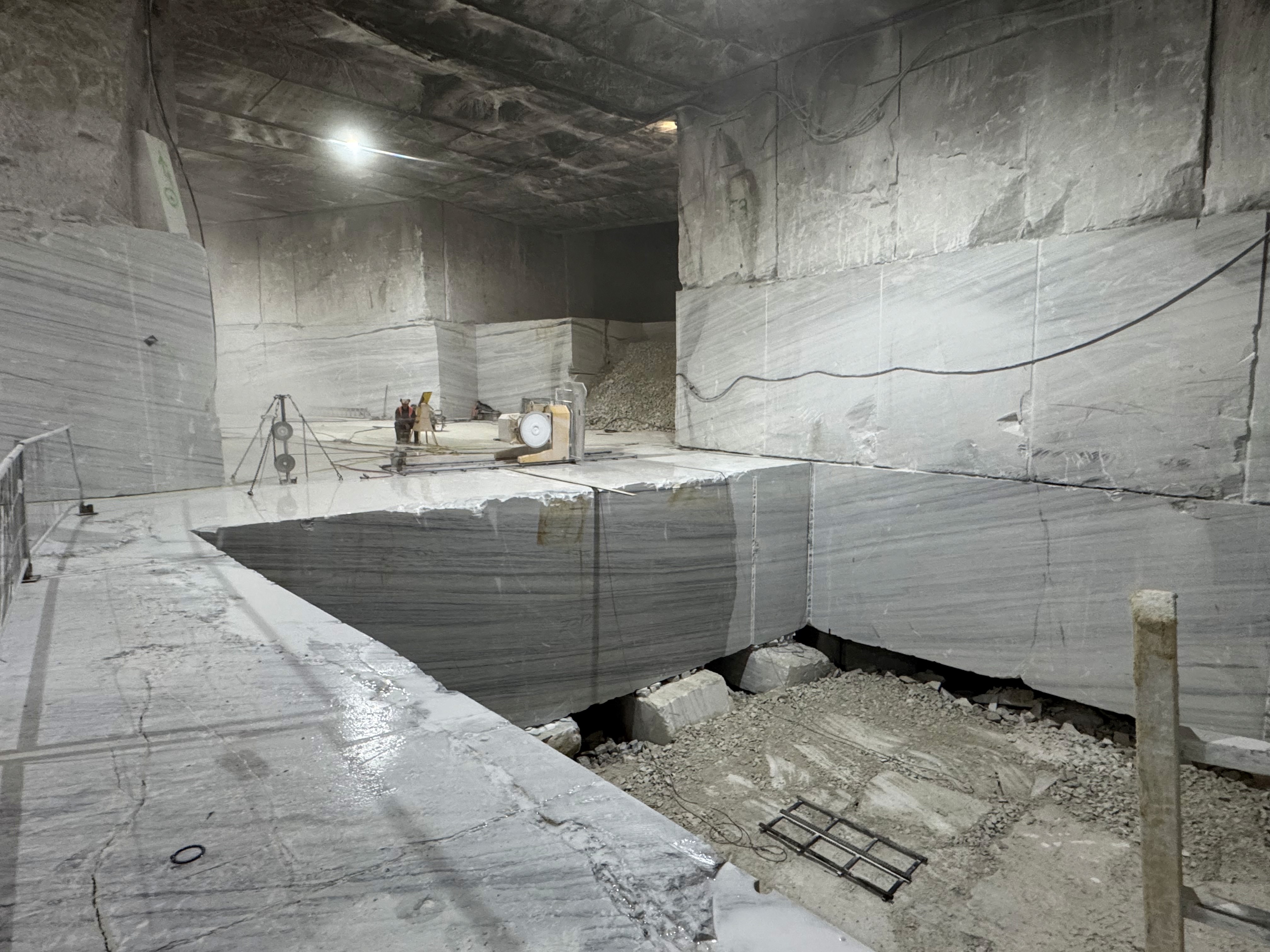
Dr. Aleksander Hohla, PhD in Human Biology, was born in 1968 in Munich, where he graduated in physics from Ludwig Maximilian University. He discovered his passion for stone in Carrara, Italy, where he still personally selects blocks of marble from Italian quarries. Since 2015, he has been working in his own studio in Vrhovčak near Samobor, where he continues to develop his distinctive sculptural language. It should also be noted that he received training in sculpture and marble and stone carving from sculptor Petar Dolić, who emphasizes that Hohla pays great attention to pedestals, treating them appropriately as an integral part of the sculpture. “The pedestals are neutral, simple, and calm, while also allowing the sculpture to rotate around its own axis. They provide the sculpture with the best possible presentation to the public, enabling viewers to enjoy the beauty of form unobstructed and from every angle” (Petar Dolić).

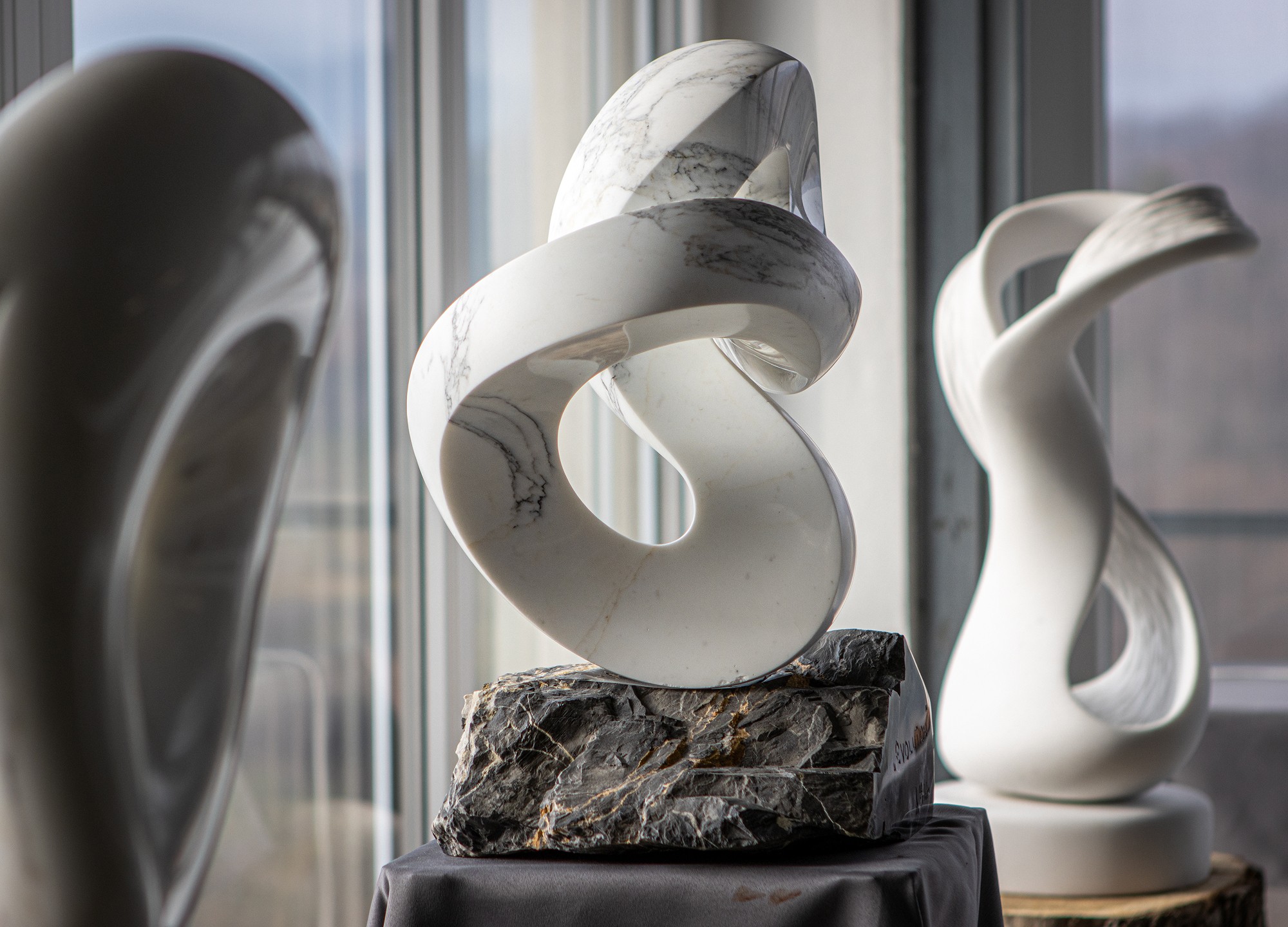
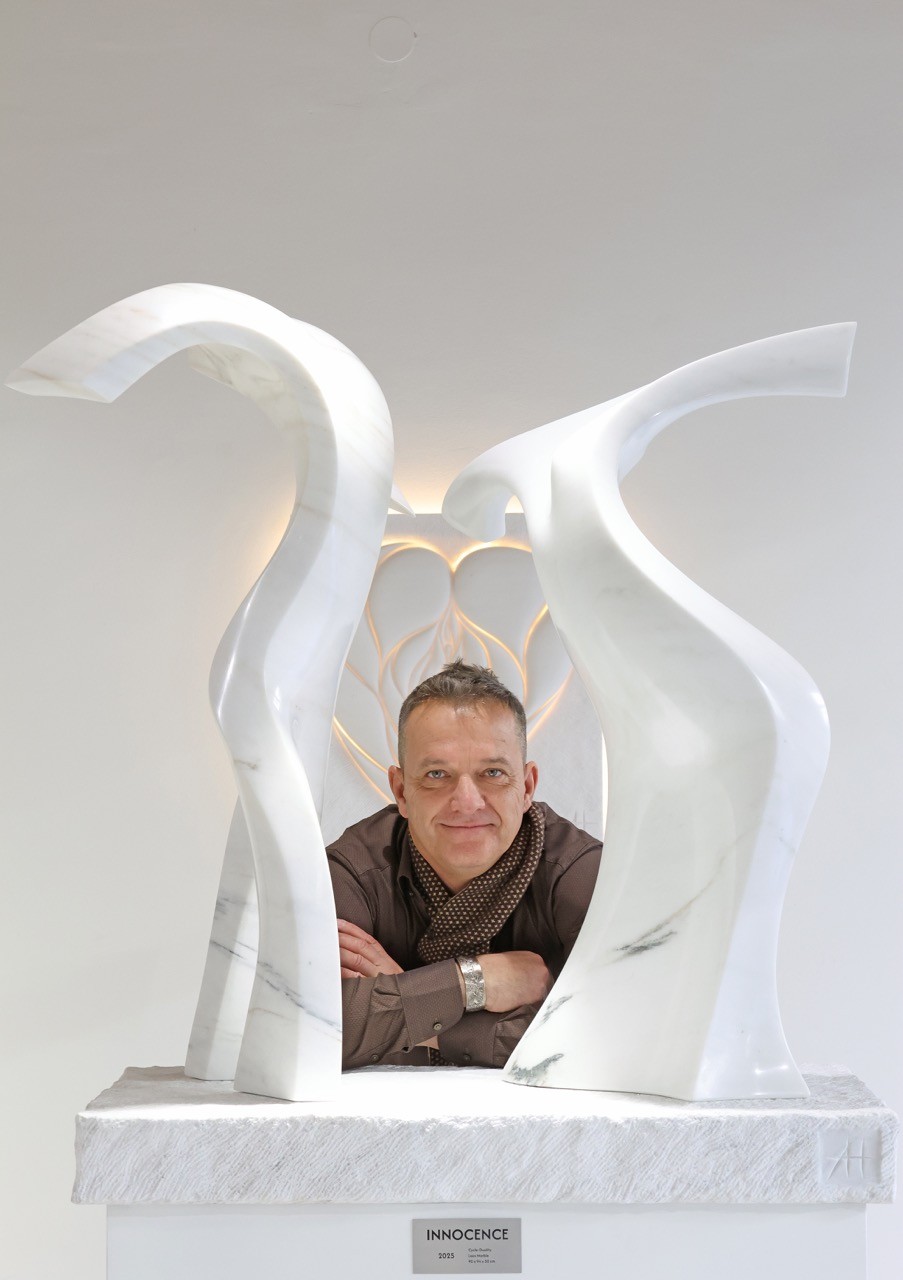
Closely aligned with the tradition of organic sculpture, marked by pronounced torsions of volume and an abstract variation of the figura serpentinata, Hohla draws inspiration from Italian Mannerism and Baroque art, as well as from certain architectural elements of those periods. These same principles are transposed into abstract forms that evoke birds or the human body.
“The organic quality of Alexander Hohla’s sculpture lies precisely in its inclination toward the clear line and the curve, toward everything condensed from the living body, but even more often from its allusion or metaphor. The rhythmic quality of some sculptures and the static nature of others lend harmony and stability to Hohla’s oeuvre, arising from his firmly established scientific postulates” (Anita Ruso Brečić).

read more

Iva Körbler

art historian and curator

KO-KE Space, Zagreb 21 Nov – 5 Dec 2025.
Published in Art Magazine Kontura, issue no. 170 / 171


Over the past several years, there has been a noticeable increase in the number of creators and artists who, after distinguished international careers in other professions, continue to study and refine artistic disciplines and crafts, as though naturally resuming a path once interrupted in their youth – for, as we know, art is hardly “a secure livelihood,” yet science and art demonstrably go hand in hand.

One such artist, whose sculptural oeuvre unquestionably transcends amateur engagement with sculpture, is Aleksander Hohla, a physicist and sculptor of German origin with a Croatian address, who recently presented himself to the Zagreb public for the first time at the multifunctional KO:KE Space. After years devoted to researching laser light and the structure of materials, Alexander Hohla turned to marble – a medium that enables him to explore the balance between strength and lightness, structure and spontaneity, science and art. In the accompanying exhibition text, curator Anita Ruso points out that “his sculptures, at once enduring and ethereal, embody both technical skill and emotional depth.” The exhibition presented a selection of works created over the last decade, in which “scientific precision transforms into artistic consistency.”

Dr. Aleksander Hohla, PhD in Human Biology, was born in 1968 in Munich, where he graduated in physics from Ludwig Maximilian University. He discovered his passion for stone in Carrara, Italy, where he still personally selects blocks of marble from Italian quarries. Since 2015, he has been working in his own studio in Vrhovčak near Samobor, where he continues to develop his distinctive sculptural language. It should also be noted that he received training in sculpture and marble and stone carving from sculptor Petar Dolić, who emphasizes that Hohla pays great attention to pedestals, treating them appropriately as an integral part of the sculpture. “The pedestals are neutral, simple, and calm, while also allowing the sculpture to rotate around its own axis. They provide the sculpture with the best possible presentation to the public, enabling viewers to enjoy the beauty of form unobstructed and from every angle” (Petar Dolić).

Closely aligned with the tradition of organic sculpture, marked by pronounced torsions of volume and an abstract variation of the figura serpentinata, Hohla draws inspiration from Italian Mannerism and Baroque art, as well as from certain architectural elements of those periods. These same principles are transposed into abstract forms that evoke birds or the human body.
“The organic quality of Alexander Hohla’s sculpture lies precisely in its inclination toward the clear line and the curve, toward everything condensed from the living body, but even more often from its allusion or metaphor. The rhythmic quality of some sculptures and the static nature of others lend harmony and stability to Hohla’s oeuvre, arising from his firmly established scientific postulates” (Anita Ruso Brečić).

read more

Iva Körbler

art historian and curator

KO-KE Space, Zagreb 21 Nov – 5 Dec 2025.
Published in Art Magazine Kontura, issue no. 170 / 171


Over the past several years, there has been a noticeable increase in the number of creators and artists who, after distinguished international careers in other professions, continue to study and refine artistic disciplines and crafts, as though naturally resuming a path once interrupted in their youth – for, as we know, art is hardly “a secure livelihood,” yet science and art demonstrably go hand in hand.

One such artist, whose sculptural oeuvre unquestionably transcends amateur engagement with sculpture, is Aleksander Hohla, a physicist and sculptor of German origin with a Croatian address, who recently presented himself to the Zagreb public for the first time at the multifunctional KO:KE Space. After years devoted to researching laser light and the structure of materials, Alexander Hohla turned to marble – a medium that enables him to explore the balance between strength and lightness, structure and spontaneity, science and art. In the accompanying exhibition text, curator Anita Ruso points out that “his sculptures, at once enduring and ethereal, embody both technical skill and emotional depth.” The exhibition presented a selection of works created over the last decade, in which “scientific precision transforms into artistic consistency.”

Dr. Aleksander Hohla, PhD in Human Biology, was born in 1968 in Munich, where he graduated in physics from Ludwig Maximilian University. He discovered his passion for stone in Carrara, Italy, where he still personally selects blocks of marble from Italian quarries. Since 2015, he has been working in his own studio in Vrhovčak near Samobor, where he continues to develop his distinctive sculptural language. It should also be noted that he received training in sculpture and marble and stone carving from sculptor Petar Dolić, who emphasizes that Hohla pays great attention to pedestals, treating them appropriately as an integral part of the sculpture. “The pedestals are neutral, simple, and calm, while also allowing the sculpture to rotate around its own axis. They provide the sculpture with the best possible presentation to the public, enabling viewers to enjoy the beauty of form unobstructed and from every angle” (Petar Dolić).

Closely aligned with the tradition of organic sculpture, marked by pronounced torsions of volume and an abstract variation of the figura serpentinata, Hohla draws inspiration from Italian Mannerism and Baroque art, as well as from certain architectural elements of those periods. These same principles are transposed into abstract forms that evoke birds or the human body.
“The organic quality of Alexander Hohla’s sculpture lies precisely in its inclination toward the clear line and the curve, toward everything condensed from the living body, but even more often from its allusion or metaphor. The rhythmic quality of some sculptures and the static nature of others lend harmony and stability to Hohla’s oeuvre, arising from his firmly established scientific postulates” (Anita Ruso Brečić).

read more

Iva Körbler

art historian and curator

I have known Alex Hohla for many years and have followed his artistic development with great interest. Although he is a physicist and highly aware of the limits of materials, he often pushes them to the brink of rupture, almost to the point where the stone could turn to dust, yet at the same time, he is laser-precise and manages to stop exactly at that fine line.


The result is an extremely smooth surface that simply invites the observer to touch it. This is something only few manage to achieve with such demanding material as stone.

The essence of his work can be found in the fact that when he sculpts a bird, he thinks about flight. His central sculptural approach is the removal of excess to present the essence as clearly as possible, something so simple, yet so difficult to achieve. For Hohla, the process of creation is pure joy. However, even such a process does not spare him from waking in the middle of the night thinking about the sculpture he is currently working on.

Alex works slowly and calmly, in a manner that reflects his personality. Integrity is a value that flows from his life into his work. By examining the themes of his cycles, we realize how situations from his life transform into his sculptural expression.

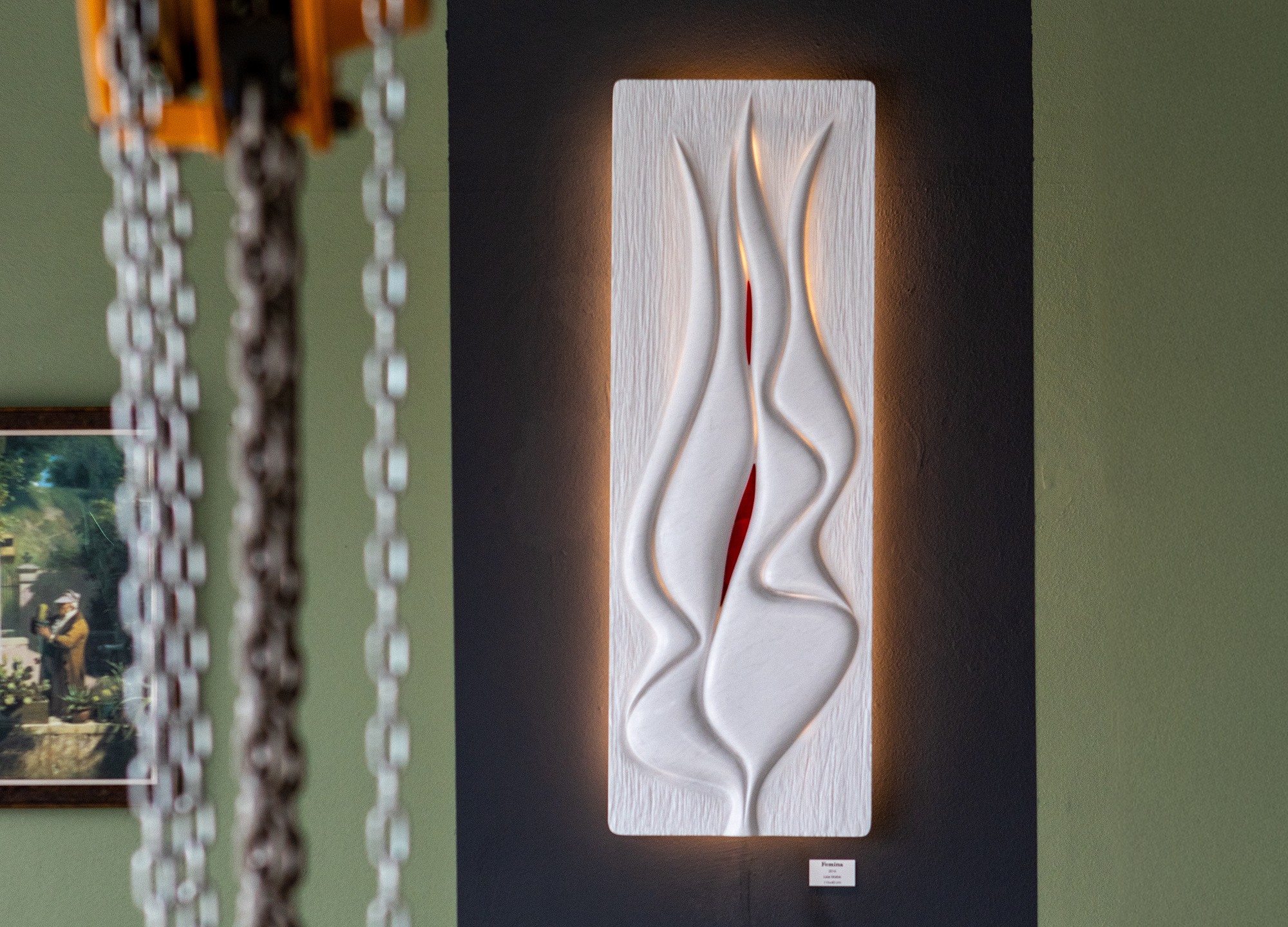
His latest piece, a female nude, is an excellent example of how removing layers can lead to perfection in form. That particular sculpture highlights femininity and the elegance of a flowing form, whose shape glides through convex-concave oppositions that form the basis of his sculptural vocabulary.

Hohla pays great attention to the pedestals, treating them as an integral part of the sculpture. They are neutral, simple and calm, often incorporating a mechanism that allows the sculpture to rotate around its own axis. This gives the artwork the ability to present itself to the viewer in the best possible way, allowing for uninterrupted enjoyment of the form’s beauty from every angle.
What particularly intrigues me about Alex's work is its precise aesthetic.

The sculptor knows exactly what he wants, he knows what is beautiful, and he insists on it time and time again. For him, the result is not the decisive element, because the result does not mark the end of the process, it fuels the next idea, which flows from the previous one. In this process, we witness the joy of life and the joy of creation, which he subtly yet directly transmits to the observer. The rhythm of his work and his life are intertwined, it is impossible to clearly separate them. His pieces are meditative records of time, meticulously crafted, and are fundamental building blocks of his entire life. As such, they deserve the attention and appreciation of both the broader and professional public.

read more

Petar Dolić

academic sculptor

I have known Alex Hohla for many years and have followed his artistic development with great interest. Although he is a physicist and highly aware of the limits of materials, he often pushes them to the brink of rupture, almost to the point where the stone could turn to dust, yet at the same time, he is laser-precise and manages to stop exactly at that fine line.


The result is an extremely smooth surface that simply invites the observer to touch it. This is something only few manage to achieve with such demanding material as stone.

The essence of his work can be found in the fact that when he sculpts a bird, he thinks about flight. His central sculptural approach is the removal of excess to present the essence as clearly as possible, something so simple, yet so difficult to achieve. For Hohla, the process of creation is pure joy. However, even such a process does not spare him from waking in the middle of the night thinking about the sculpture he is currently working on.

Alex works slowly and calmly, in a manner that reflects his personality. Integrity is a value that flows from his life into his work. By examining the themes of his cycles, we realize how situations from his life transform into his sculptural expression.

His latest piece, a female nude, is an excellent example of how removing layers can lead to perfection in form. That particular sculpture highlights femininity and the elegance of a flowing form, whose shape glides through convex-concave oppositions that form the basis of his sculptural vocabulary.

Hohla pays great attention to the pedestals, treating them as an integral part of the sculpture. They are neutral, simple and calm, often incorporating a mechanism that allows the sculpture to rotate around its own axis. This gives the artwork the ability to present itself to the viewer in the best possible way, allowing for uninterrupted enjoyment of the form’s beauty from every angle.
What particularly intrigues me about Alex's work is its precise aesthetic.

The sculptor knows exactly what he wants, he knows what is beautiful, and he insists on it time and time again. For him, the result is not the decisive element, because the result does not mark the end of the process, it fuels the next idea, which flows from the previous one. In this process, we witness the joy of life and the joy of creation, which he subtly yet directly transmits to the observer. The rhythm of his work and his life are intertwined, it is impossible to clearly separate them. His pieces are meditative records of time, meticulously crafted, and are fundamental building blocks of his entire life. As such, they deserve the attention and appreciation of both the broader and professional public.

read more

Petar Dolić

academic sculptor

I have known Alex Hohla for many years and have followed his artistic development with great interest. Although he is a physicist and highly aware of the limits of materials, he often pushes them to the brink of rupture, almost to the point where the stone could turn to dust, yet at the same time, he is laser-precise and manages to stop exactly at that fine line.


The result is an extremely smooth surface that simply invites the observer to touch it. This is something only few manage to achieve with such demanding material as stone.

The essence of his work can be found in the fact that when he sculpts a bird, he thinks about flight. His central sculptural approach is the removal of excess to present the essence as clearly as possible, something so simple, yet so difficult to achieve. For Hohla, the process of creation is pure joy. However, even such a process does not spare him from waking in the middle of the night thinking about the sculpture he is currently working on.

Alex works slowly and calmly, in a manner that reflects his personality. Integrity is a value that flows from his life into his work. By examining the themes of his cycles, we realize how situations from his life transform into his sculptural expression.

His latest piece, a female nude, is an excellent example of how removing layers can lead to perfection in form. That particular sculpture highlights femininity and the elegance of a flowing form, whose shape glides through convex-concave oppositions that form the basis of his sculptural vocabulary.

Hohla pays great attention to the pedestals, treating them as an integral part of the sculpture. They are neutral, simple and calm, often incorporating a mechanism that allows the sculpture to rotate around its own axis. This gives the artwork the ability to present itself to the viewer in the best possible way, allowing for uninterrupted enjoyment of the form’s beauty from every angle.
What particularly intrigues me about Alex's work is its precise aesthetic.

The sculptor knows exactly what he wants, he knows what is beautiful, and he insists on it time and time again. For him, the result is not the decisive element, because the result does not mark the end of the process, it fuels the next idea, which flows from the previous one. In this process, we witness the joy of life and the joy of creation, which he subtly yet directly transmits to the observer. The rhythm of his work and his life are intertwined, it is impossible to clearly separate them. His pieces are meditative records of time, meticulously crafted, and are fundamental building blocks of his entire life. As such, they deserve the attention and appreciation of both the broader and professional public.

read more

Petar Dolić

academic sculptor

To everything there is a season,
a time for every purpose under heaven.
A time to be born and a time to die,
a time to plant and a time to harvest..."


Ecclesiastes 3:1


Alexander Hohla refers to himself as a Spätstarter, a German term which literally translates as a late starter. Someone who began later than expected, later than others, perhaps even later than he “should have.”

But looking at his life and work, I am inclined to echo the ancient wisdom of Ecclesiastes: there truly is a time for everything. And with that, I begin with the conviction that Hohla chose exactly the right moment to reveal what he had been crafting for years in the silence of his studio.
He created daily, without validation, audience or critique, driven by a strong inner need to work with marble. He sculpted without external pressures or incentives, immersed in the noise of his tools and the stillness of his thoughts. He shaped what he felt, at once confined and, paradoxically, liberated by the limits of his own hands and imagination.

Hohla’s world lives in contrast and contradiction: from science to art, from lasers to marble, from chaos to calm. A physicist by training, he spent years working with gas lasers in the field of experimental science before gradually moving into the intuitive world of sculpture. It is no surprise that he was drawn to a form of art where precision still reigns.

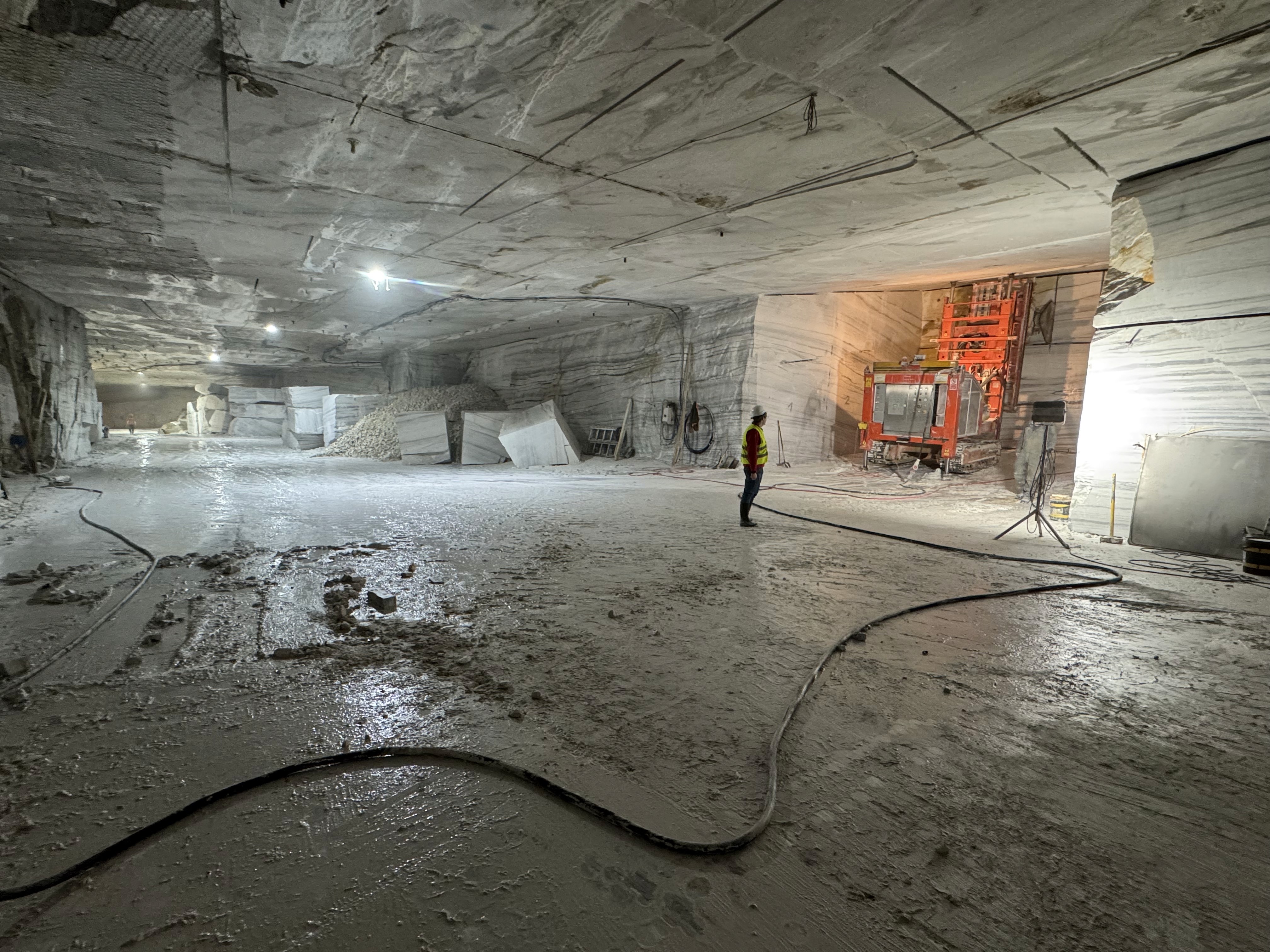
The massive marble blocks he personally selects from Italian quarries become elegant, deeply considered forms, each one shaped by the type of marble and the line it invites. He leaves grey marble with its matte finish, allowing its quiet shimmer to emerge. He polishes Carrara to a silky softness, while from Arabescato he draws out the vibrancy of its veined, living patterns.

read more

Anita Ruso Brečić

art historian and curator

To everything there is a season,
a time for every purpose under heaven.
A time to be born and a time to die,
a time to plant and a time to harvest..."


Ecclesiastes 3:1


Alexander Hohla refers to himself as a Spätstarter, a German term which literally translates as a late starter. Someone who began later than expected, later than others, perhaps even later than he “should have.”

But looking at his life and work, I am inclined to echo the ancient wisdom of Ecclesiastes: there truly is a time for everything. And with that, I begin with the conviction that Hohla chose exactly the right moment to reveal what he had been crafting for years in the silence of his studio.
He created daily, without validation, audience or critique, driven by a strong inner need to work with marble. He sculpted without external pressures or incentives, immersed in the noise of his tools and the stillness of his thoughts. He shaped what he felt, at once confined and, paradoxically, liberated by the limits of his own hands and imagination.

Hohla’s world lives in contrast and contradiction: from science to art, from lasers to marble, from chaos to calm. A physicist by training, he spent years working with gas lasers in the field of experimental science before gradually moving into the intuitive world of sculpture. It is no surprise that he was drawn to a form of art where precision still reigns.

The massive marble blocks he personally selects from Italian quarries become elegant, deeply considered forms, each one shaped by the type of marble and the line it invites. He leaves grey marble with its matte finish, allowing its quiet shimmer to emerge. He polishes Carrara to a silky softness, while from Arabescato he draws out the vibrancy of its veined, living patterns.

read more

Anita Ruso Brečić

art historian and curator

To everything there is a season,
a time for every purpose under heaven.
A time to be born and a time to die,
a time to plant and a time to harvest..."


Ecclesiastes 3:1


Alexander Hohla refers to himself as a Spätstarter, a German term which literally translates as a late starter. Someone who began later than expected, later than others, perhaps even later than he “should have.”

But looking at his life and work, I am inclined to echo the ancient wisdom of Ecclesiastes: there truly is a time for everything. And with that, I begin with the conviction that Hohla chose exactly the right moment to reveal what he had been crafting for years in the silence of his studio.
He created daily, without validation, audience or critique, driven by a strong inner need to work with marble. He sculpted without external pressures or incentives, immersed in the noise of his tools and the stillness of his thoughts. He shaped what he felt, at once confined and, paradoxically, liberated by the limits of his own hands and imagination.

Hohla’s world lives in contrast and contradiction: from science to art, from lasers to marble, from chaos to calm. A physicist by training, he spent years working with gas lasers in the field of experimental science before gradually moving into the intuitive world of sculpture. It is no surprise that he was drawn to a form of art where precision still reigns.

The massive marble blocks he personally selects from Italian quarries become elegant, deeply considered forms, each one shaped by the type of marble and the line it invites. He leaves grey marble with its matte finish, allowing its quiet shimmer to emerge. He polishes Carrara to a silky softness, while from Arabescato he draws out the vibrancy of its veined, living patterns.

read more

Anita Ruso Brečić

art historian and curator

Copyright © Alexander Hohla. All rights reserved ・ Designed by HYFN

Copyright © Alexander Hohla. All rights reserved

Designed by Iulian